Hiring movers for Sheen Lane flats: parking & access tips
Posted on 26/05/2026
Moving out of, or into, a flat on Sheen Lane can look simple on a map and then become awkward the moment a van arrives. Tight parking, short loading windows, narrow entrances, shared driveways, permit concerns, and stair-heavy access can all slow the day down. That is exactly why Hiring movers for Sheen Lane flats: parking & access tips matters so much. The right preparation helps your removal team work safely, keeps neighbours onside, and reduces the chance of delays or extra charges.
This guide breaks down what to check before moving day, how access affects the job, and how to brief movers so they arrive ready for the reality of flat removals. If you are planning a local move, it will also help you decide whether you need a full removals crew, a man with a van in East Sheen, or a more specialised flat removals East Sheen service.
Truth be told, good access planning is one of the easiest ways to make a move feel calmer. It is not glamorous. It is also one of the biggest reasons a move runs on time.

Why Hiring movers for Sheen Lane flats: parking & access tips Matters
Flat moves are rarely difficult because of distance. They are difficult because of access. A van may only need a few metres of clear space to unload, but if that space is blocked by parked cars, a low wall, or a tight communal entrance, the whole job becomes slower and more physically demanding.
On a busy street like Sheen Lane, small access issues can quickly turn into practical problems:
- the van may have to park farther away than expected
- carrying boxes becomes slower and more tiring
- large furniture may need extra handling
- the move can take longer than the quote allowed for
- neighbours or building managers may object if access is not explained in advance
This is why experienced movers ask specific questions about parking, stairs, door widths, lift access, and timing. They are not being fussy. They are building a workable plan. If you want to prepare properly, it helps to combine access planning with a broader move schedule, like the approach described in this calm and efficient moving plan.
For flats, every extra metre between the van and the front door matters. So does whether the route has sharp corners, awkward steps, or a narrow internal hallway. A mover who understands these details can bring the right team size, tools, and van position from the start.
How Hiring movers for Sheen Lane flats: parking & access tips Works
The process is straightforward when handled properly. The mover first needs a clear picture of the property and the street environment. Then they decide how to park, what equipment to bring, and how many crew members are likely to be needed.
In practical terms, this usually involves five stages:
- Initial property review - You describe the flat, building layout, and the street outside.
- Parking check - The mover assesses whether the van can stop close enough to load efficiently.
- Access planning - Stairs, lifts, intercoms, coded doors, and long corridors are factored in.
- Load strategy - Furniture and boxes are moved in an order that avoids bottlenecks.
- Day-of adjustment - If parking changes or access is temporarily blocked, the team adapts without improvising blindly.
A good company will usually want details such as floor level, lift size, parking restrictions, and whether there are any bulky items like wardrobes, sofas, or a piano. If you are dealing with specialist items, it can be worth reviewing furniture removals East Sheen or, for more delicate instruments, piano removals East Sheen.
It also helps to know what you are moving. Packed boxes are one thing. A fridge, mattress, or modular sofa introduces a different level of handling. If you are moving larger household items, internal guidance such as bed and mattress relocation tips or sofa storage advice can support your planning.
Key Benefits and Practical Advantages
Access planning is not just a logistics exercise. It directly improves the quality of the move.
1. Less time wasted on moving day
When the van can stop close to the entrance, the team spends less time walking back and forth. That efficiency matters most on flat moves, where repeated trips can otherwise add up fast.
2. Lower risk of damage
Shorter carry distances reduce the chance of knocking walls, scraping bannisters, or dropping items on corners. This is especially relevant for furniture, mirrors, TV units, and white goods.
3. Better cost control
If a move takes longer because the van cannot access the property well, the labour time may increase. A clear access plan helps keep quotes more accurate and reduces the chance of surprise extensions.
4. Safer lifting and carrying
Moving heavy items over longer distances or up repeated flights of stairs increases strain. Good planning supports safer handling and aligns with the principles outlined in kinetic lifting basics.
5. Fewer neighbour complaints
Loading in a controlled way is quieter and tidier. That may sound minor, but in shared buildings, it helps maintain good relations and keeps the day calm.
| Access setup | Typical effect on the move | Best use case |
|---|---|---|
| Van parked directly outside | Fastest loading, least carrying | Ground-floor flats or clear roadside parking |
| Short walk from the entrance | Manageable, but slower and more tiring | Most standard flat moves |
| Long carry from side street or car park | Higher labour effort, more time needed | Restricted streets, busy parking areas, larger moves |
| Limited access via stairs only | Requires more care and possibly more crew | Upper-floor flats without lift access |
Who This Is For and When It Makes Sense
This advice is relevant for almost anyone moving a flat on or near Sheen Lane, but it is especially useful in a few situations.
- Tenants in upper-floor flats - Stair access can change the whole timeline.
- Owners moving larger furniture - Sofas, wardrobes, and beds are easier to plan around before the van arrives.
- Students and first-time movers - If you are not familiar with parking restrictions or shared entrances, a little guidance prevents stress. See also student removals East Sheen.
- People with limited moving time - Same-day moves or tight handover windows leave little room for delays. In those cases, same-day removals East Sheen can be useful.
- Anyone in a managed building - You may need to notify the concierge, building manager, or neighbours before the team arrives.
This is also the right approach if your flat move includes storage. For example, if your new place is not ready yet, it can help to arrange storage in East Sheen so bulky items do not have to be squeezed into temporary spaces.
If your move is more than a simple point-to-point job, the broader removal services in East Sheen overview can help you decide which service level fits best.
Step-by-Step Guidance
Use this approach to reduce parking problems and access surprises.
Step 1: Measure the access path
Start from the van parking point and walk the route to your front door. Look for steps, tight corners, low ceilings, narrow gates, or awkward turns inside the building. If a sofa or wardrobe cannot turn the corner comfortably, tell the mover early.
Step 2: Check parking rules before move day
Do not assume a van can stop wherever there is space. Check for permit areas, time restrictions, yellow lines, resident bays, suspended bays, and loading-only zones. If you are unsure, ask your local council or building manager for the latest guidance.
Step 3: Tell the mover the exact floor and lift details
"Second floor" is useful. "Second floor with no lift, narrow stairwell, and a half-landing turn" is much better. Those details help determine crew size and whether a stair trolley is practical.
Step 4: Reserve or secure a loading spot where possible
If your building has a shared forecourt or limited access bay, ask in advance whether the space can be kept free for the van. A short, direct loading route often saves more time than you might expect.
Step 5: Stage your items near the exit
Boxes, dismantled furniture, and fragile items should be grouped in a way that matches the loading order. For packing structure and box labelling, these packing tips for a flawless move are especially useful.
Step 6: Protect common areas
If your building has painted walls, carpets, or glass doors, ask whether protective covers or extra care will be needed. This matters in flats where the route from door to van is shared with residents.
Step 7: Keep a backup plan
What happens if the closest bay is taken when the van arrives? Decide in advance where the second-best parking option is and how long the carry will be. Good movers will appreciate the clarity.
"The best moving days are rarely the most complicated ones. They are the best planned ones."
Expert Tips for Better Results
These are the small, practical details that experienced movers notice immediately.
- Share photos of the entrance and parking area - A few clear pictures can explain more than a long message.
- Book the van size with access in mind - Bigger is not always better if the street is tight. A slightly smaller van may be easier to position.
- Disassemble furniture early - Bed frames, tables, and shelving units are much easier to move when broken down first.
- Mark fragile items clearly - This reduces hesitation at doorways and when stacking inside the van.
- Pack a separate essentials bag - Keep documents, chargers, medication, snacks, and keys with you, not in the van.
- Move low-priority items first - If the front path is long, let the movers begin with the least awkward boxes to establish flow.
- Plan around lift availability - In buildings with a shared lift, you may need to work around busy periods. A short delay is easier to manage than a blocked lift on move day.
If you are moving mixed contents, including soft furnishings or appliances, it is worth matching item type to handling method. For instance, a freezer should be prepared differently from a bookshelf. The guide on proper freezer storage is a good reminder that preparation matters before transport, not after.
Also, if you are decluttering before the move, do not leave it to the night before. Pre-move decluttering tips can reduce the amount you need to carry and make access far less stressful.
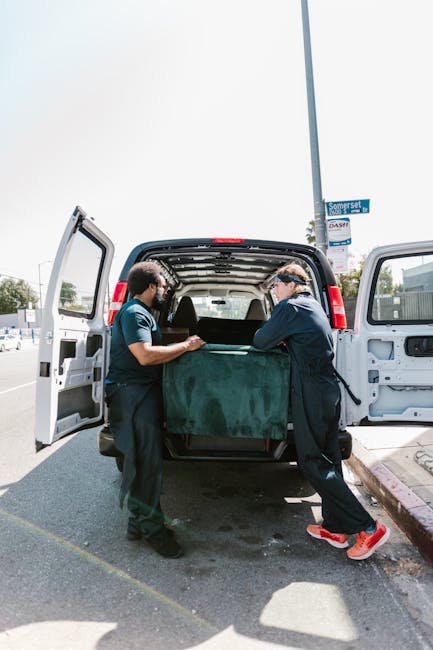
Common Mistakes to Avoid
The most avoidable problems are usually the ones people assume will sort themselves out on the day.
Not checking parking restrictions early
This is the classic mistake. A flat may be easy to access physically, but if the van cannot legally stop close enough, the move becomes slower straight away.
Underestimating stair impact
One flight is rarely the issue. Repeated trips up and down are. That is especially true when you have heavy boxes, a mattress, or awkward furniture.
Giving vague descriptions
"It should be fine" does not help a mover plan. "There is a shared entrance, a narrow hallway, and no lift" does.
Failing to clear hallways
Even a tidy flat can have a cluttered hallway full of shoes, umbrellas, recycling, and coat stands. Clear the route before the crew arrives.
Leaving dismantling too late
People often underestimate how long furniture dismantling takes. If the bed frame still needs tools and the clock is already ticking, the whole load-out can stall.
Ignoring weather and road conditions
Wet pavements, early school traffic, or a delivery truck parked where you expected to load can all change the plan. A small buffer in timing can save the day.
For a broader moving-day mindset, the advice in this house-cleaning guide before moving out is useful too, because a clean exit route is simply easier to work with.
Tools, Resources and Recommendations
You do not need specialist equipment for every flat move, but a few practical items make access problems easier to handle.
- Measuring tape - Check door widths, stair turns, and furniture dimensions.
- Phone camera - Take photos of the frontage, stairwell, and any parking signs.
- Moving blankets - Helpful for protecting banisters, doors, and furniture edges.
- Labels and marker pens - Keep loading efficient by identifying rooms and priorities.
- Dismantling tools - Basic screwdrivers, Allen keys, and tape should be ready before the move starts.
- Box trolleys or straps - Useful in longer carry scenarios, though not always suitable for every stairwell.
From a service perspective, the most useful resources are those that help you compare options without guesswork. Start with pricing and quotes if you want to understand how access may affect the estimate, and read the services overview to see what support is available beyond simple transport.
If your move involves larger objects or a more complex load, a suitable removal van and man and van support may be the practical middle ground between a basic hire and a full crew.
Law, Compliance, Standards, or Best Practice
For a flat move, the main compliance issues are usually practical rather than complicated. You are typically dealing with parking rules, building access rules, safe manual handling, and fair use of shared spaces. Because local restrictions can vary, it is sensible to check current parking guidance with the relevant council or building management rather than rely on assumptions.
Best practice usually includes the following:
- tell the mover about access restrictions before booking
- avoid blocking entrances, fire exits, or driveways
- follow building rules for lift bookings and moving hours
- use safe lifting techniques and suitable equipment
- confirm insurance and liability terms before the move
If safety is a priority, read the company's insurance and safety information and its health and safety policy. Those pages are useful for understanding how the team approaches risk, handling, and property protection.
Payment clarity is also part of good practice. Before you commit, it is sensible to review payment and security details so you know how bookings, deposits, or card payments are handled. If you want a fuller view of the business background, about us gives additional context.
Options, Methods, or Comparison Table
Different flat-move setups call for different service styles. The best choice depends on how tight the access is, how much you need moving, and how quickly the job needs to be completed.
| Option | Best for | Strengths | Trade-offs |
|---|---|---|---|
| Man and van | Smaller flat moves, a few rooms, lighter furniture | Flexible, practical, often efficient for local access | May be less ideal for complex multi-floor moves |
| Flat removal service | Standard apartment moves with stairs or shared entrances | Better structured for flats and access constraints | May cost more than a minimal transport-only option |
| Full removals team | Larger households, heavy furniture, tight deadlines | More hands, faster load times, better for complex access | Not always necessary for a small move |
| Removal van only | Highly organised moves with self-loading help | Can work for very straightforward jobs | Less support for heavy lifting or awkward access |
If your move is especially time-sensitive, a service like removals East Sheen may be more suitable than trying to piece together transport and labour separately. The practical question is not "what is cheapest?" but "what reduces friction for this specific flat?"
Case Study or Real-World Example
Consider a typical two-bedroom flat on Sheen Lane with third-floor access and no lift. The resident has a sofa, a bed frame, two wardrobes, a freezer, and around thirty boxes. The street has limited space, and parking closest to the building is often occupied early.
A poorly planned move might begin with the van circling the block, the resident trying to direct traffic from the pavement, and the movers carrying heavy items a long distance in several trips. The result is predictable: slower loading, more fatigue, and a higher chance that one awkward item gets scratched or knocked.
A better plan looks more like this:
- the mover receives photos of the entrance and the stairwell in advance
- the resident checks whether a loading bay or permit bay is available
- the sofa and bed frame are dismantled the day before
- fragile boxes are staged near the exit
- the crew arrives with clear knowledge that the job involves stair carries
That small amount of preparation changes the tone of the day. Instead of reacting to access problems, the mover already has a plan. The resident is less rushed. The load-out becomes calmer. And the van leaves on time rather than becoming an extended negotiation with the street.
If you are moving larger items within that same scenario, guides on heavy object lifting and moving a piano without help show why specialised handling matters.
Practical Checklist
Use this checklist in the 48 hours before your flat move.
- Confirm the van can park as close as possible to the entrance.
- Check local parking restrictions and loading limits.
- Tell the mover the floor level, stair count, and lift details.
- Measure any awkward furniture and internal doorways.
- Dismantle beds, tables, and other large items where possible.
- Label boxes by room and priority.
- Clear hallways, porches, and stair landings.
- Notify your building manager or neighbours if needed.
- Prepare parking alternatives in case the nearest bay is occupied.
- Keep keys, documents, and essentials with you.
- Ask about insurance, payment, and arrival timing before move day.
- If needed, arrange storage for overflow items ahead of time.
Small actions here make a visible difference. The move feels more organised, and the team can work without constant interruption.
Conclusion
Hiring movers for a Sheen Lane flat is not just about finding a van. It is about planning around parking, stairways, access points, and the realities of shared buildings. When you brief the movers well, the whole job becomes safer, quicker, and easier to manage. That is especially true for flats where a simple unloading spot is not guaranteed.
Prepare the route, check the parking rules, measure awkward items, and choose a mover who asks the right questions before moving day. If you do that, you are far more likely to enjoy a clean, efficient move rather than a chaotic one. And let's face it, moving day already has enough moving parts without adding parking drama.
Get a free quote today and see how much you can save.